
Symptoms · 4 min read · September 23, 2026
CVT Shudder, Hesitation or Whining: What It Means
CVTs feel different from regular automatics, so it can be hard to tell what is normal. Here is how to spot real CVT trouble and what usually causes it.
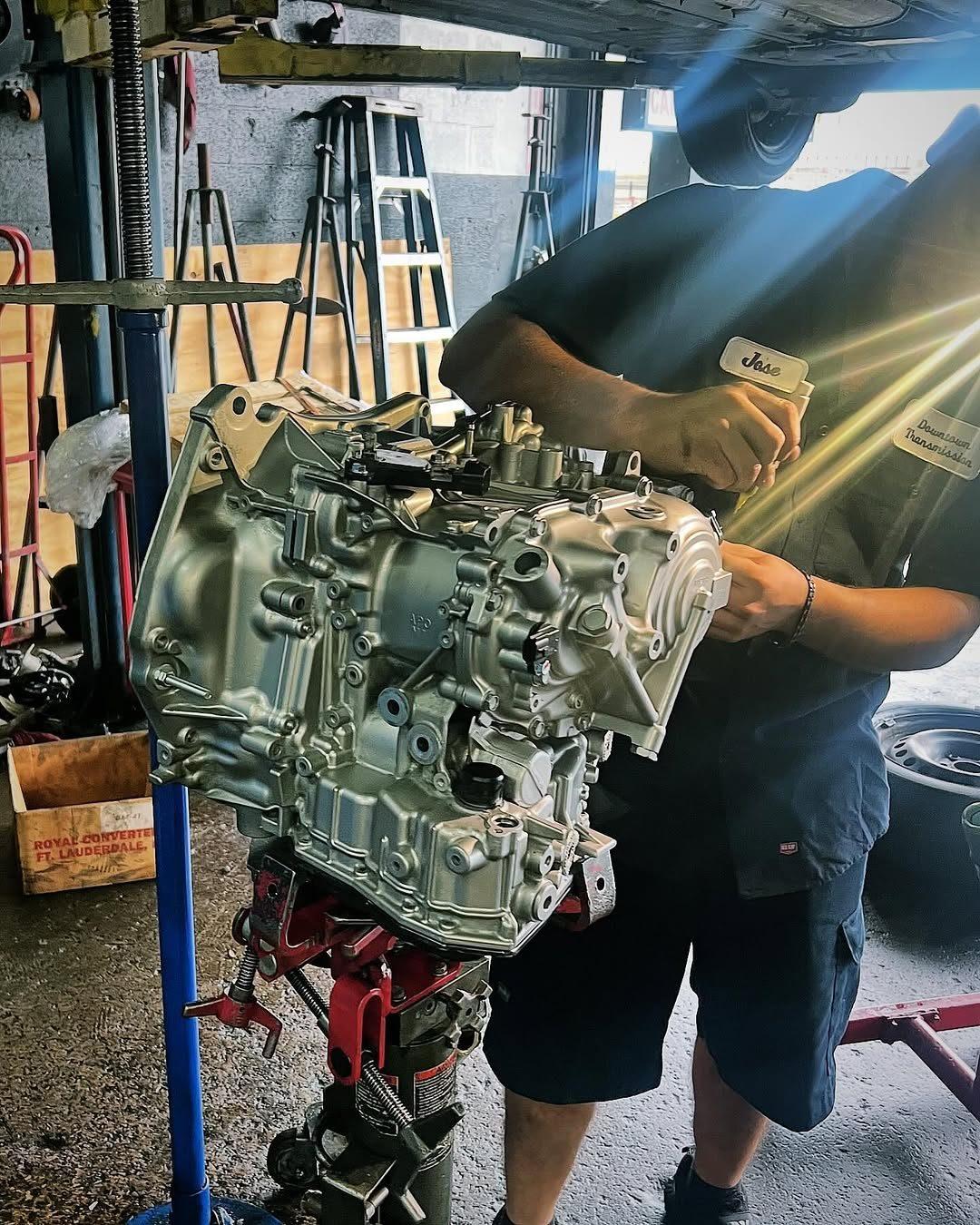
A lot of cars on South Florida roads use a continuously variable transmission, or CVT. You will find them in many compact cars and small SUVs from Nissan, Subaru, Honda, Toyota and others. Instead of fixed gears, a CVT uses a steel belt or chain running between two pulleys that change size. That lets the engine stay near its most efficient speed while the car speeds up.
Because a CVT feels different from a traditional automatic, drivers are often unsure whether something is wrong. This guide covers what is normal, what is not, and what usually causes the problem.
What is normal for a CVT
- The engine RPM stays fairly steady while the car picks up speed.
- No clear shift points. Some CVTs are programmed to fake shifts so they feel more familiar, and that is normal too.
- A hum or drone when you accelerate hard, since the engine holds a higher RPM.
- A slightly rubbery feeling when you press the gas.
If your car has always felt this way and nothing has changed, it is probably just how a CVT drives.
Signs that something is wrong
- Shudder or vibration when pulling away from a stop or at low speed, almost like driving over a rumble strip.
- Hesitation or a delay before the car moves after you press the gas.
- A whine or howl that gets louder with speed and was not there before.
- Jerking, surging or a sudden loss of power.
- The engine revs but the car does not speed up to match.
- A warning light, or the car cutting power on its own. Some vehicles do this to protect the CVT when it gets too hot.
Common causes
Old or wrong fluid
CVTs are very sensitive to fluid. They need the specific fluid the manufacturer calls for, and it has to be in good condition so the belt and pulleys grip properly. Worn fluid can cause shudder and hesitation. A universal fluid that is not approved for your CVT can cause problems on its own.
Heat
Heat is hard on any transmission, and CVTs are no exception. Stop-and-go traffic, summer temperatures and heavy loads all add heat. Over time that breaks down the fluid faster and wears internal parts.
Creeping forward on I-95, stopping, then creeping forward again is the kind of driving that is hardest on CVT fluid. Long idles with the AC running do not help either.
Software
The CVT is run by a computer. Some manufacturers have released software updates for shudder or hesitation complaints on certain models. Part of a proper diagnosis is checking whether an update applies to your car.
Worn internal parts
A worn belt or chain, scored pulleys, failing bearings or a valve body problem can cause slipping, noise and shudder. Worn bearings are a common source of whining. Once parts inside are damaged, the fix is usually internal repair or a replacement unit, depending on the model and what parts are available.
Something that is not the CVT at all
Whining can also come from a wheel bearing, power steering pump or alternator. Hesitation can come from engine problems like a weak ignition coil or a dirty throttle body. That is why a scan and a road test matter before anyone blames the transmission.
How to help your CVT last
- Follow the severe service schedule in your owner's manual if you drive in heavy traffic or heat. In South Florida, that is most of us.
- Use only the manufacturer's approved CVT fluid.
- Accelerate smoothly. Hard launches from every light add stress.
- Stay within your vehicle's towing limit. Many small CVT vehicles are rated for light loads only.
- Get small changes checked early instead of waiting for them to get worse.
What to expect at the shop
A CVT diagnosis should include a fluid check, a scan of the transmission computer, a look at live data and a road test to feel the complaint. At our Plantation shop, you get a written estimate before any work, and nothing is done without your OK. If a fluid service or software update is likely to help, we will tell you that before talking about bigger repairs.
Tell the technician exactly when the problem shows up. Shudder from a stop, hesitation only when the car is hot, and a whine at highway speed all point in different directions. The more detail you give, the faster the real cause is found.
CVT acting up? Call Downtown Transmissions at (954) 764-5060 or stop by 631 S State Rd 7 in Plantation to book a CVT diagnostic, Monday to Friday, 8 AM to 5 PM.
Quick answers
Is it normal for a CVT to whine?
A light hum under hard acceleration is normal for many CVTs. A new whine or howl that gets louder with speed is not, and it can point to worn bearings or other internal wear. Have it checked before it gets louder.
Can a CVT be repaired, or does it have to be replaced?
It depends on what failed. Fluid, software and some valve body or sensor problems can be repaired. When the belt, pulleys or bearings are damaged, a remanufactured or used replacement unit is often the more practical choice.
How often should CVT fluid be changed?
Check your owner's manual. Many list a shorter interval for severe driving, which often includes heavy stop-and-go traffic and hot weather. If you are not sure, a shop can check the fluid condition for you.