
Repair Decisions · 4 min read · September 23, 2026
What Happens During a Transmission Diagnostic
A real transmission diagnosis is more than reading a code. Here is each step a good shop takes before recommending a repair.
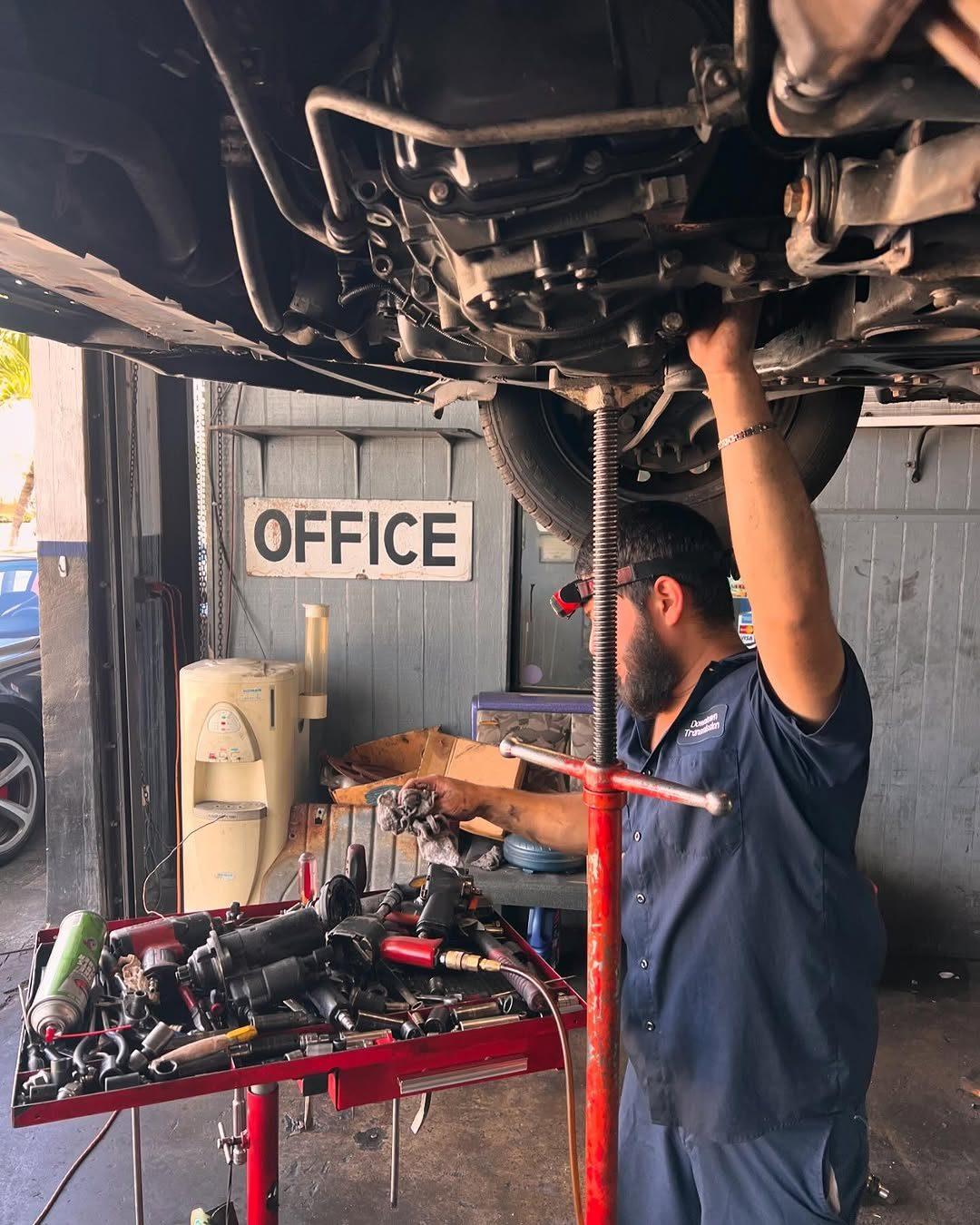
If your car is shifting strangely, the first step should be a real diagnosis. Not a guess, and not a quote for a new transmission over the phone. Many problems that feel like a failing transmission turn out to be something smaller, like a sensor, a wiring issue, a leak or a software update.
Here is what a thorough transmission diagnostic looks like, so you know what to expect and what questions to ask.
1. The conversation
It starts with you. The technician needs to know what the car is doing and when. Is it worse cold or hot? Does it happen in one gear, or only when accelerating hard? Did it start after a repair, a battery change, or driving through standing water? These details save time and point the diagnosis in the right direction.
Bring any paperwork from past transmission work, like a fluid service or an earlier repair. It helps the technician know what has already been done.
It helps to write down notes before you come in. If the problem comes and goes, a short video with sound can help too, as long as a passenger records it and not the driver.
2. Fluid check
The technician checks the fluid level and condition. Low fluid points to a leak. Dark, burnt-smelling fluid points to overheating. Metal or friction material in the fluid can point to internal wear. On vehicles without a dipstick, this is done on a lift using the manufacturer's procedure. The fluid alone does not tell the whole story, but it often tells the technician where to look next.
3. Computer scan and live data
Modern transmissions are run by a computer, often called the TCM. The technician connects a scan tool that can talk to the transmission computer, not only the engine computer. They look for stored trouble codes, then watch live data such as:
- Transmission fluid temperature
- Input and output shaft speeds
- Which gear the computer is asking for versus what is actually happening
- Torque converter clutch slip
- Shift solenoid commands
A trouble code is a starting point, not an answer. For example, a code for an incorrect gear ratio tells you something is slipping, but not why. The live data and road test help narrow it down.
4. The road test
Next, the technician drives the car to feel the problem firsthand, ideally with the scan tool connected. They check how it engages into Drive and Reverse, how it shifts through each gear, how it behaves under light and heavy throttle, and how it acts once fully warmed up. Stop-and-go driving on local roads can bring out problems that a quick lap around the block would miss.
If the problem only shows up hot, the technician may need to drive longer or recreate the conditions that bring it out. That is one reason a diagnosis sometimes takes more than a few minutes.
5. Inspection and further testing
Depending on what they find, the technician may also:
- Inspect for leaks, damaged wiring and loose connectors
- Check the engine and transmission mounts, which can cause clunks
- Look up service bulletins and software updates for your vehicle
- Test solenoids and sensors electrically
- Check line pressure with a gauge
- Drop the pan to look for debris
Some problems can be found quickly. Others, especially ones that come and go, take more time. A good shop tells you upfront what the diagnostic includes.
The goal is to separate problems outside the transmission, like wiring, sensors and mounts, from problems inside it. Outside problems are often faster and less costly to fix, so they are worth ruling out first.
6. The written estimate
When the diagnosis is done, you should get a clear written estimate that explains what was found, what the shop recommends and what it will cost. At Downtown Transmissions, nothing is done without your OK. If there is more than one reasonable option, such as a repair versus a replacement unit, you should see both. After the repair, the car is road tested again to confirm the problem is fixed.
A good estimate breaks out parts and labor, lists what is included, and notes anything that could change the price, like extra damage found once the transmission is opened. If something is unclear, ask. You should leave knowing what is wrong, what it will take to fix it, and what could happen if you wait.
Want a straight answer about your transmission? Call (954) 764-5060 or book a transmission diagnostic at our Plantation shop on State Road 7, Monday to Friday, 8 AM to 5 PM.
Quick answers
How long does a transmission diagnostic take?
It depends on the problem. A clear code and an obvious leak can be found quickly. A problem that only shows up when the car is hot or after a long drive can take longer to reproduce.
Can an auto parts store diagnose my transmission?
A free code read can be a useful first look, but many basic readers only see engine codes, not transmission computer codes. It also does not include live data, a road test or an inspection. Treat it as a clue, not a diagnosis.
Will I have to pay for repairs I did not approve?
You should not. A reputable shop gives you a written estimate and waits for your OK before doing the work. If something new comes up during a repair, they should call you before going further.